May 1, 2026
Reintroducing MIIPOC: the Mentorship Initiative of Indigenous and Planners of Colour
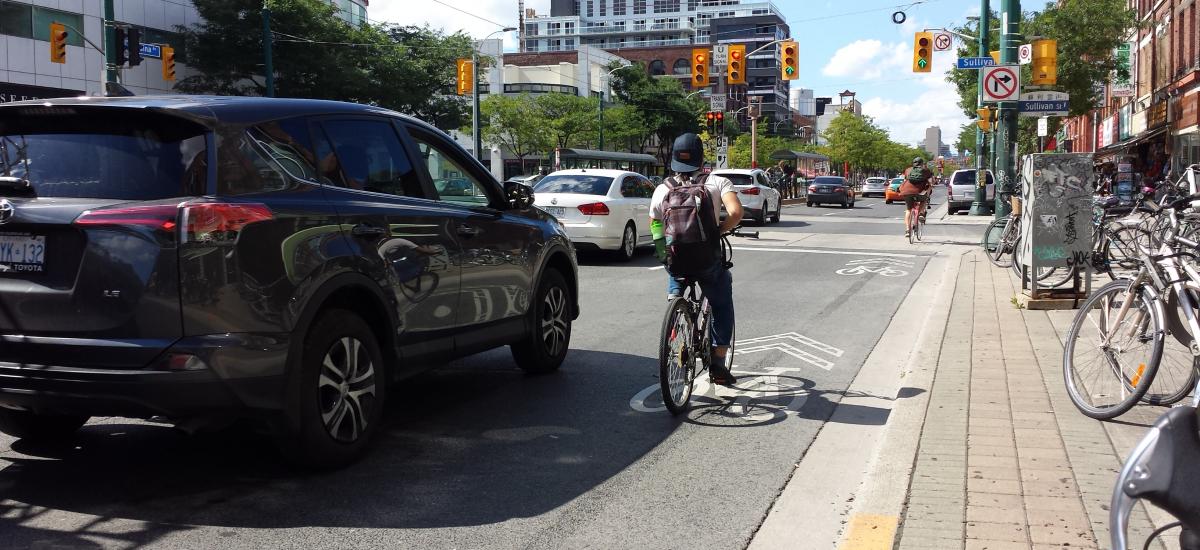
Healthy, liveable communities show up in the everyday. Can you walk to a store without feeling unsafe? Can your kids get to a park without a car? Does a public space feel welcoming? The way we design communities can support (or limit) daily movement and well-being.
The Public Health Agency of Canada summarizes that people are more physically active in communities with mixed land use, well-connected street networks, and higher residential density than in places designed for automobile dependence.1 And a “healthy cities” approach highlighted by the World Health Organization ties healthier urban living to choices that improve air quality and promote physical activity, like shifting from car trips to walking and cycling where possible.2
So where does Mentorship Initiative of Indigenous and Planners of Colour (MIIPOC) fit into that? Here’s the honest answer: it’s not about representation “for the sake of representation.” It’s about planning competence and being able to read a place with more than one lens and to run engagement in ways that work.
The same street can feel different depending on your gender, disability, age, religion, language, migration story, or whether you’ve ever been targeted in a public space. Those experiences can change what you notice, what you ask, and how you interpret feedback. MIIPOC is explicit that equity work includes empowering those with intersecting and diverse identities not flattening people into a single label.
… better planning comes from strong skills and deeper context.
Canadian planning data helps explain why this still matters right now. In the Canadian Institute of Planners 2024 EDI Insight Survey,3 the largest group of respondents identified as white (67.9 per cent), while 17.4 per cent identified as people of colour. The same report found an overall inclusion score of 73.3 per cent, with “Voice” scoring lowest. It also notes that groups reporting lower inclusion include people of colour, Indigenous respondents, people with disabilities, LGBTQ+ respondents, and immigrants. These gaps are exactly where mentorship and community infrastructure can make a practical difference.
How MIIPOC makes a difference
MIIPOC was established in 2019 because planning has a significant impact on people’s lives and well-being, yet communities facing the most harm have been under-represented in a profession that must act on behalf of the public. MIIPOC’s own story is straightforward: it provides a social and professional networking infrastructure, connecting Indigenous, Black, and other planners of colour to skills development and peer mentorship.
The model is structured and specific. MIIPOC runs a six-month cohort (January to June) that focuses on relationship-building, community-building events, and professional development. It’s also clear about outcomes: employment can happen, but the program is not meant to lead mentees directly to employment. Instead, it’s meant to expand insight and networks.
MIIPOC is explicit that equity work includes empowering those with intersecting and diverse identities not flattening people into a single label.
Mentees commit to six months with skills and professional development workshops led by experienced and respected city-building professionals. Overall, it’s majorly volunteer-run with passionate planners operating the organization and working hard to continue its growth, because MIIPOC understands most workers with a mentor say it’s helpful for career advancement, skill-building, managing difficult situations, and job satisfaction.4
MIIPOC also does “community” professional development in a real, grounded way. In December 2025, MIIPOC hosted a Meet & Network event at the University of Toronto, designed to bring together students, early-career professionals, and established planners
to share experiences through speed networking, a networking bingo icebreaker, and a “Community Vision Wall.”
In 2023, the City of Markham and MIIPOC launched a partnership creating two four-month internships, supported by mentorship and exposure to real planning work.5 By late 2025, concrete outcomes included two interns transitioning into full-time roles (one with Markham and one with a neighbouring township), and two participants pursuing further education.6 In February 2026, the City of Markham entered its third cohort into the internship program, which included two MIIPOC volunteers, reflecting how the initiative is driven by people who share the lived experiences and intersectional identities of the community they support.
The same street can feel different depending on your gender, disability, age, religion, language, migration story, or whether you’ve ever been targeted in a public space.
Support is growing. Ontario Professional Planners Institute announced financial support to recruit a MIIPOC mentorship coordinator, with the Black Planning Project hosting the role focused on program administration, recruitment coordination, events, and outreach.7
If you’re skeptical of organizations like this, that’s fair. We ask that you remember that MIIPOC’s case is simple: better planning comes from strong skills and deeper context. When the profession builds pathways for Indigenous, Black, and other planners of colour, recognizing the full, intersectional lives people carry, it strengthens how we listen, how we design, and how we deliver communities that are genuinely healthy and liveable.
References
1 Supportive Environments for Physical Activity: How the Built Environment Affects Our Health (2025). Public Health Agency of Canada. https://www.canada.ca/en/public-health/services/health-promotion/healthy-living/supportive-environments-physical-activity-built-environment-affects-health.html
2 Health Promotion. The mandate for healthy cities (n.d.). World Health Organization. https://www.who.int/teams/health-promotion/enhanced-wellbeing/ninth-global-conference/healthy-cities
3 Equity, Diversity and Inclusion Report (2024). Canadian Institute of Planners. https://www.cip-icu.ca/wp-content/uploads/2024/09/2024-Equity-Diversity-and-Inclusion-Insight-Survey-Report-ENGLISH-V6_compressed.pdf
4 Future Skills Centre/Environics Institute/Diversity Institute (2025). https://fsc-ccf.ca/wp-content/uploads/2025/03/Mentorship-in-the-Workplace_FSC_Environics_DI.pdf
5 City of Markham and MIIPOC reduce employment barriers through new partnership. City of Markham (2023). https://www.markham.ca/about-city-markham/news/news-releases/city-markham-and-miipoc-reduce-employment-barriers-through-new-partnership
6 City of Markham and MIIPOC continue to reduce employment barriers through though growing internship partnership (2025). https://www.markham.ca/about-city-markham/news/news-releases/city-of-markham-and-miipoc-continue-reduce-employment-barriers-through-growing-internship-partnership
7 OPPI partners with MIIPOC to support mentorship. Ontario Professional Planners Institute (2025). https://ontarioplanners.ca/news/press-releases/2025/oppi-partners-with-miipoc-to-support-mentorship-of-black%2C-indigenous%2C-and-planners-of-colour
The views expressed in this blog post are those of the author(s), and may not reflect the position of the Ontario Professional Planners Institute.