May 1, 2026
Retired RPP Spotlight: Blair Allen, MCIP, RPP
In 2025, after 37 years in the transportation planning field, Blair Allen retired from his long career with Grand River Transit (GRT) and Kitchener Transit. Over the years, Allen held a number of positions, finishing his career as the Manager of Transit Development for GRT. He also participated in numerous committees and policy processes and presented at a long list of conferences.
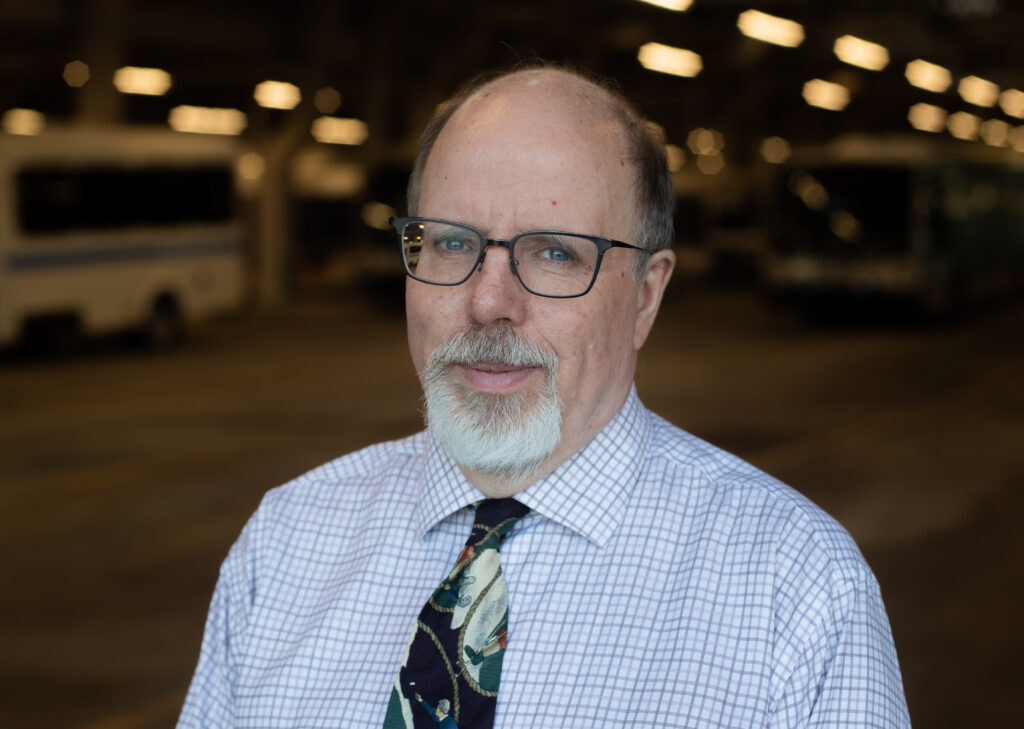
Just a few of the many projects he was involved with include on-street infrastructure, new transit facilities, transit network restructuring, community buses, rural services, and policy work. He piloted bike racks on buses and provided input to the various municipal official plans to better connect transit and land use that was later included in provincial guideline and policy reviews. Especially notable, Allen spearheaded GRT’s implementation of a new Intelligent Transportation System as part of a new express service that he was key in obtaining funding for and implementing, which then led to ridership increases and helped to justify the ION light rail system that launched in 2019. He and his team led the network restructuring and related infrastructure as part of the ION launch.
He also led the development of a green-energy, zero-emission bus strategy for GRT, which culminated in a pilot project to procure battery electric buses and related infrastructure. He currently sits on the Canadian Urban Transit Zero Emission Bus Joint Procurement Initiative board, which supports joint procurement of zero-emission vehicles for public transit agencies.
Looking back, Allen says his interest in city planning started in high school, although he didn’t know then what planning was beyond the urban geography section of his school courses.
“My high school geography teacher was amazed I followed his advice in university,” he says. “My dad was interested in local politics, and together with him, I went to various public meetings on development in our area of Scarborough. One of the city planners I met gave me a tour of their department with the sage advice to not get overly attached to specific plans and showed me the pile of plans they designed that ended up going nowhere.”
Allen grew up next to the future location of the Scarborough RT at the end of the Bloor-Danforth subway (Line 2).
“I rode the first subway out of Kennedy station in Grade 13, never imagining my whole career would be related to that,” he says.
At the time, there was very little transit content in the University of Waterloo’s School of Urban and Regional Planning, but he learned what he could, completing a Bachelor of Environmental Studies (Honours Urban & Regional Planning) in 1985 and a Master of Applied Science (Civil Engineering – transport) in 1988.
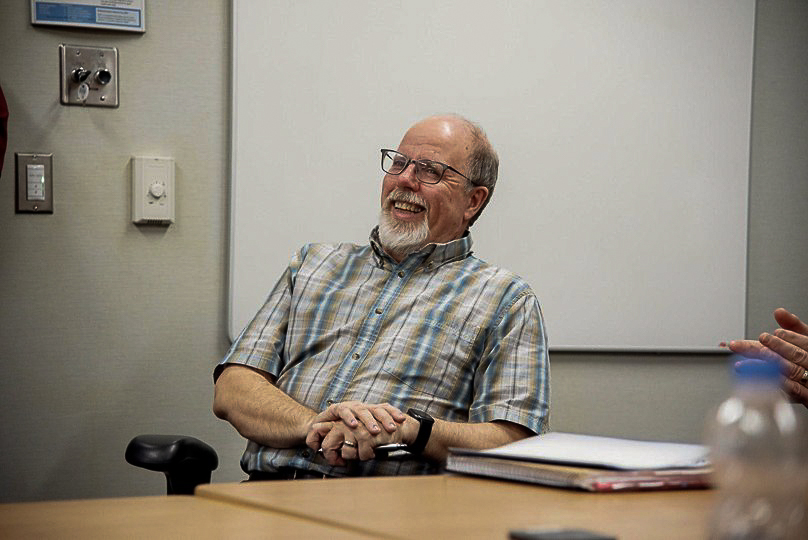
Mentoring young planners and planning students — helping them see a direction to follow and providing them with relevant experience — has always been important to Allen. At one point, he and his staff compiled a list of students hired over the years — there were more than 70 from co-op programs alone.
“A prime interest has always been the relationship between land use and transportation, wanting to ensure that our city form could not only accommodate effective transit choices but also, conversely, allow people to make choices in housing and work locations that gave them more transportation choices,” says Allen. “Avoiding the necessity of buying a car — or more often, avoiding buying two or three — saves money and allows families to put those funds towards other needs and desires such as a mortgage or children’s activities or education.”
Allen has seen some significant changes in public transit over his career, including one that seems small but is very important for healthy, liveable cities: sidewalk installation.
“Early in my career, we had to fight to get a sidewalk added to any development, and without sidewalks, accessibility to transit becomes limited,” he says, noting that eventually, planners and the development industry were convinced that in most cases, sidewalks should just be included from the start.
Then there’s technology.
“Technological improvements have added so much to improve the transit experience and planning, from accessibility advancements like low-floor buses — seems so obvious today that stairs were a barrier — to using GPS to track vehicles, allowing better information for customers, operations, and planners to improved fare technology,” says Allen.
In 2024, he received the Canadian Urban Transit Association’s William G. Ross Lifetime Achievement award, recognizing his long-time contribution to transit in Canada. Allen’s nomination emphasized his role in mentoring students and others early in their transit careers. The nomination started with some of his staff.
“I was truly honoured and humbled to receive this award, seeing it less as what I did alone and more a reflection of the efforts of teams I’ve worked with and provided guidance to over the years,” says Allen.
“Land use and transportation decisions are intricately connected and if we fail to provide communities with active transportation — walking, cycling, transit — they will not be healthy or sustainable,” says Allen. “I think it is vital that this be acknowledged and the connections be used in whatever role a planner has. The reality is that a large portion of society cannot independently drive a car — too old, too young, disability of some form, economic limits — and as such, if we want a community suitable for all, then we must design our land use in a way that a car isn’t a necessity for all our trips.”
Mentoring young planners and planning students — helping them see a direction to follow and providing them with relevant experience — has always been important to Allen. At one point, he and his staff compiled a list of students hired over the years — there were more than 70 from co-op programs alone.
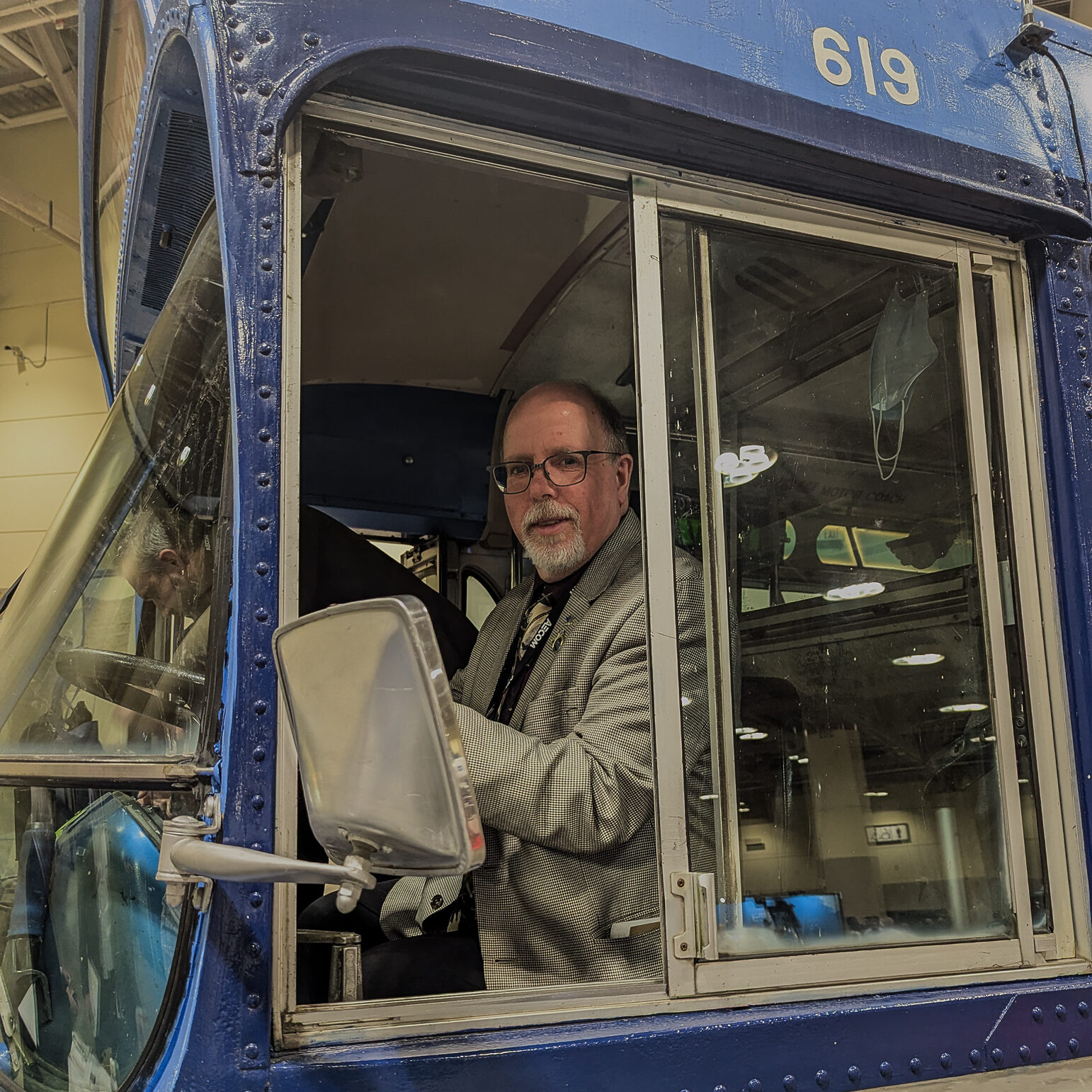
“While many ended up with transit in their future career, it was just as important to see some realize that other areas of planning were their passion, and it was always exciting to see them flourish wherever they ended up,” he says.
A key message from Allen: “It is always important for students and young planners to remain positive and realize they have a lot to contribute,” he says, adding that sometimes staff get discouraged when they first encounter down turns and tough economic times that limit what can be provided to the public. “But everything is cyclical and the nature of planning is that we need to look ahead and see how we can help our communities get through tough times and be ready to lead into new healthy communities.”
When Allen looks ahead to the future of transit and planning, he sees progress particularly in two areas.
“While progress on electric buses has stalled recently, I still see the ability to reduce our environmental impact further through electrification to be something to watch over the next few years,” he says. “I also think it is exciting to see more understanding of how different areas of planning can be integrated and work together with a realization that land use development can be more effective when other aspects of planning are considered — transit, mobility, social, public health, and so on.”
“Understanding and building upon the interplay between different aspects of planning is something that needs to be encouraged.”
The views expressed in this blog post are those of the author(s), and may not reflect the position of the Ontario Professional Planners Institute.