October 1, 2018
Starting the Dialogue: Planning for Reconciliation in Ontario
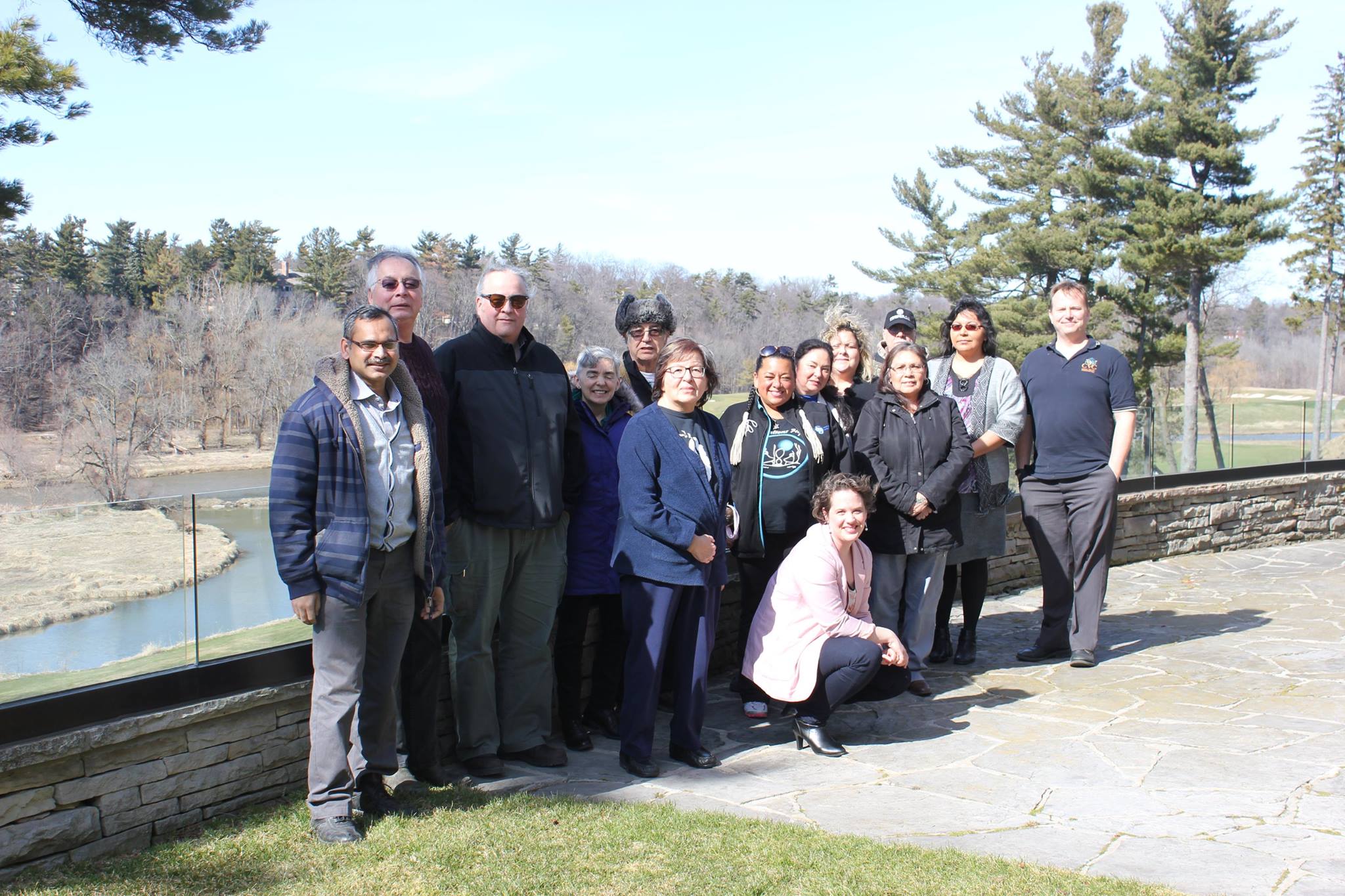
Group photo from a First Nations Roundtable. Courtesy of Susan Robertson, RPP
After 150 years, the truth is finally out. This is a cause for celebration because through the force of its undeniable power, many positive changes are coming. We are now at a turning point for social justice in Ontario and Canada, within which the planning profession is at the forefront.
The hard truth is that the Canadian legacy of colonialization and cultural genocide is deeply painful to face, but the good news is we need not consign our mistakes to the past and leave them there. Instead, we can learn from them and do something by taking action together, for a shared and better future.
The roadmap has even been written for us, to support our initiatives moving forward. This is the intent of the Truth and Reconciliation Commission: Calls to Action; to guide us in ushering in a new beginning for Non-Indigenous and Indigenous Nations, based on healing, trust and respect.
Things are happening quickly. New laws, policies and actions are emerging at a steady pace: from a series of Supreme Court rulings (Delgamuukw, Sparrow, Haida, Taku River Tlingit, Marshall; Bernard, West Moberly, Tsilhqot’in, Clyde River, Chippewas of the Thames First Nation; First Nation of Nacho Nyak Dun and Ktunaxa Nation) which created Duty to Consult[i] to as it’s currently employed to TRC Call to Action No. 52[ii] which, if fully adopted, would profoundly change the approach to planning across every jurisdiction in the country.
These critical advancements in Indigenous rights are generating profound social change and redefining our relationships to land with undeniable impacts to the planning profession. The first-ever inclusion of Aboriginal rights into Ontario’s Provincial Policy Statement in 2014 is a prime example of how changes in law are impacting the land-use planning directly.
The challenge now is how? How do we apply these major legal and policy shifts within the work that we do day-to-day as Registered Professional Planners, especially given the natural diversity of our work? It seems daunting as the implications to our established norms may be significant.
The Canadian Institute of Planners’ Draft Policy Statement on Planning Practice and Reconciliation demonstrates a national level of commitment to contribute to healing our wounded relationship with Indigenous peoples.
Local Planning Organizations are also taking steps. OPPI is in the process of forming an Indigenous Task Force that will support members with educational resources and best governance practices for Indigenous planning. The goal is to support and promote understanding of Indigenous planning in Ontario.
So, the process is starting and there are many ways that we can meaningfully contribute to reconciliation in our work as Registered Professional Planners. As community builders working in growth, adaption and renewal, intimately involved in the disposition of land and engaged with a wide variety of partners and stakeholders through various policies, laws and forms of governance, we are in a truly unique position to start the dialogue for reconciliation. Meaningful dialogue on land and governance through the planning process can profoundly benefit of Non-Indigenous and Indigenous Nations. The time is has come to find ways to bring Aboriginal title (the inherent Aboriginal right to a land or a territory) and Aboriginal Treaty rights (Aboriginal rights set out in a Treaty) into the decision-making processes of land use planning.
- the Federation of Canadian Municipalities First Nation-Municipal Land Use Planning Tool;
- the City of Calgary’s Indigenous Policy Framework;
- the City of Ottawa’s Aboriginal Working Committee for inter-governmental partnerships;
- the City of Montreal’s Montreal Urban Aboriginal Community Strategy Network for improving the quality of life for Aboriginal people in the greater Montreal area;
- the City of Toronto’s newly launched Indigenous Affairs Office and
- the Shared Path Consultation Initiative, an organization based out of Toronto working to strengthen Indigenous-municipal relationships and ensure Indigenous voices and rights are a sustained and integral part of the Ontario land-use planning process.
You can also begin the process of reconciliation within the work that you do. There’s many tools and resources online to refer to as well as corporate training programs and online seminars readily available to set you on a good path:
- Embark on your educational journey, which has no shortage reading material! Learn about the First Nations, Métis and Indigenous communities within your area, their Treaty rights and history.
- Watch out for common engagement pitfalls. The Indigenous Corporate Training website has twelve suggestions referenced here: https://www.ictinc.ca/blog/12-common-mistakes-in-first-nation-consultation that are helpful reminders.
Reconciliation has placed planning in Ontario and Canada in a paradigm shift. As planners, we have the unprecedented opportunity to work alongside nations that have been planning communities in Canada for over 10,000 years; to listen, connect and apply their ways of knowing to our land use planning processes. I strongly believe that the sacred trust that First Nations, Métis and Indigenous communities hold with the land will be of great benefit to growth of our communities and the public good, now and in future generations.
Miigwetch, Ona, Merci, Thank-you!
The views expressed in this blog post are those of the author(s), and may not reflect the position of the Ontario Professional Planners Institute.
Post by Susan Robertson, RPP